What a Good Shift Passdown Looks Like: A 6-Point Checklist
A shift passdown checklist for supervisors: the 6 things every passdown needs so the next shift knows what's idle, what's half-done and who owns it.

You walk in for your shift. Coffee's still too hot to drink. Somebody from the last crew is already halfway to the parking lot.
You've got maybe ten minutes to figure out three things: what's down, what's half-done, and who owns it.
That's what a shift passdown (some plants call it a shift handover) is for. And on a lot of floors, it doesn't do the job.
The passdown you usually get
You know the type.
"Press 4 weird."
Weird how? Down? Running slow? Running fine but making noise? Did anybody call maintenance? Is it safe to run?
Or the classic: "Running, but." Running, but somebody rigged a workaround to keep it going. Running, but it needs watching. Running, but don't touch the second setting. Whatever the "but" was, it left with the last shift.
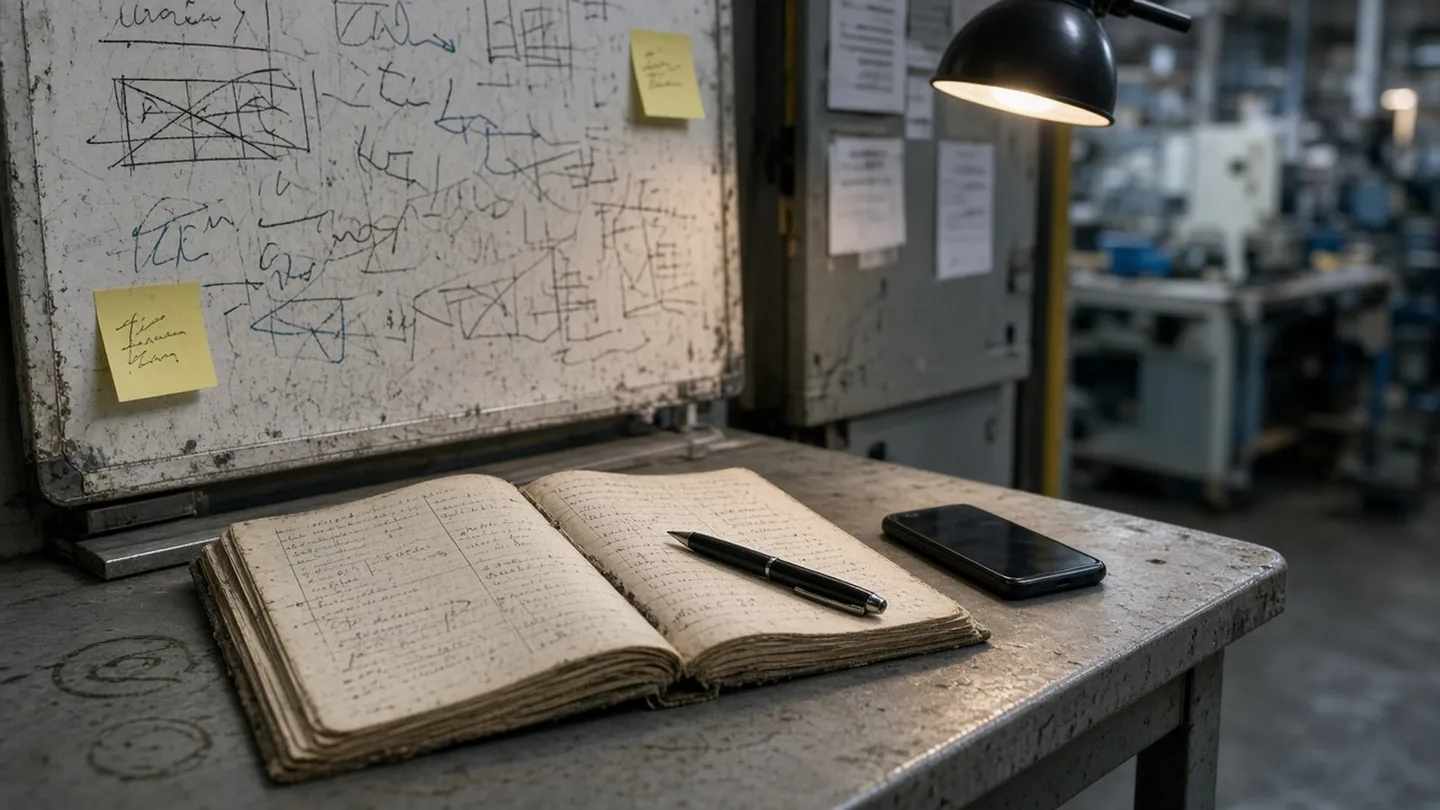
Then there's the passdown that lives in five places at once. Part of it is on the whiteboard. Part of it is in a text to the lead. Part of it is on a clipboard by the time clock. Part of it is in a work order nobody's going to read until Thursday. Good luck putting that together in ten minutes.
None of this is because people don't care. It's because shift change is never as long as it should be, and the tools most floors use for passdowns were never built for it. A desk diary records what happened. It doesn't tell the next crew what to do about it.
The UK's workplace safety regulator studied shift handovers at process plants and found the same pattern. Most logbooks were free-form diaries, mostly about what already happened, and every person wrote theirs differently. (HSE study) Different industry, different country, same problem.
The shift passdown checklist: 6 things to include
A good passdown isn't longer. It's clearer. It answers the questions the next supervisor is going to ask anyway, so they don't have to hunt you down or call you on your drive home.
Here's the checklist:
1. Status of every area and machine. Running, down, or running with a problem. No "weird." If it's down, say why and since when.
2. What's half-done. A mold change started but not finished. A setup that's 80% there. A machine that's locked out and tagged, and why. Anything the next crew will walk into mid-job needs a line.
3. Workarounds, in writing. If something's running because of a temporary fix, that fix goes in the passdown. This is the "running, but" problem. The workaround that nobody wrote down is the one that bites the next shift.
4. Open issues with an owner. Not just "coolant leak on line 2." Who called it in, who's on it, what happens next. An issue without an owner is just a worry you're handing off.
5. One place. Whatever you use, the whole passdown lives there. Not the whiteboard plus the texts plus the clipboard. One place the next crew checks, every time.
6. Proof it was read. The outgoing shift wrote it. Did the incoming shift actually see it? A quick acknowledgment closes the loop. It's not about blame. It's so nobody's guessing.
If your passdown covers those six things, the next supervisor's first ten minutes look very different. Less detective work, fewer surprise calls, less redoing troubleshooting somebody already did last night.
Why a paper passdown skips the checklist
The checklist isn't complicated. The problem is doing it in the six minutes you actually get at shift change, with gloves on, standing at a machine.
Paper doesn't push you to cover every area. It doesn't remind you to name an owner. It doesn't tell you whether the next shift read it. And when the passdown gets spread across a whiteboard and a group text, nobody's sure which one is current.
That's the gap we built ShiftPanda to close.
Where ShiftPanda fits
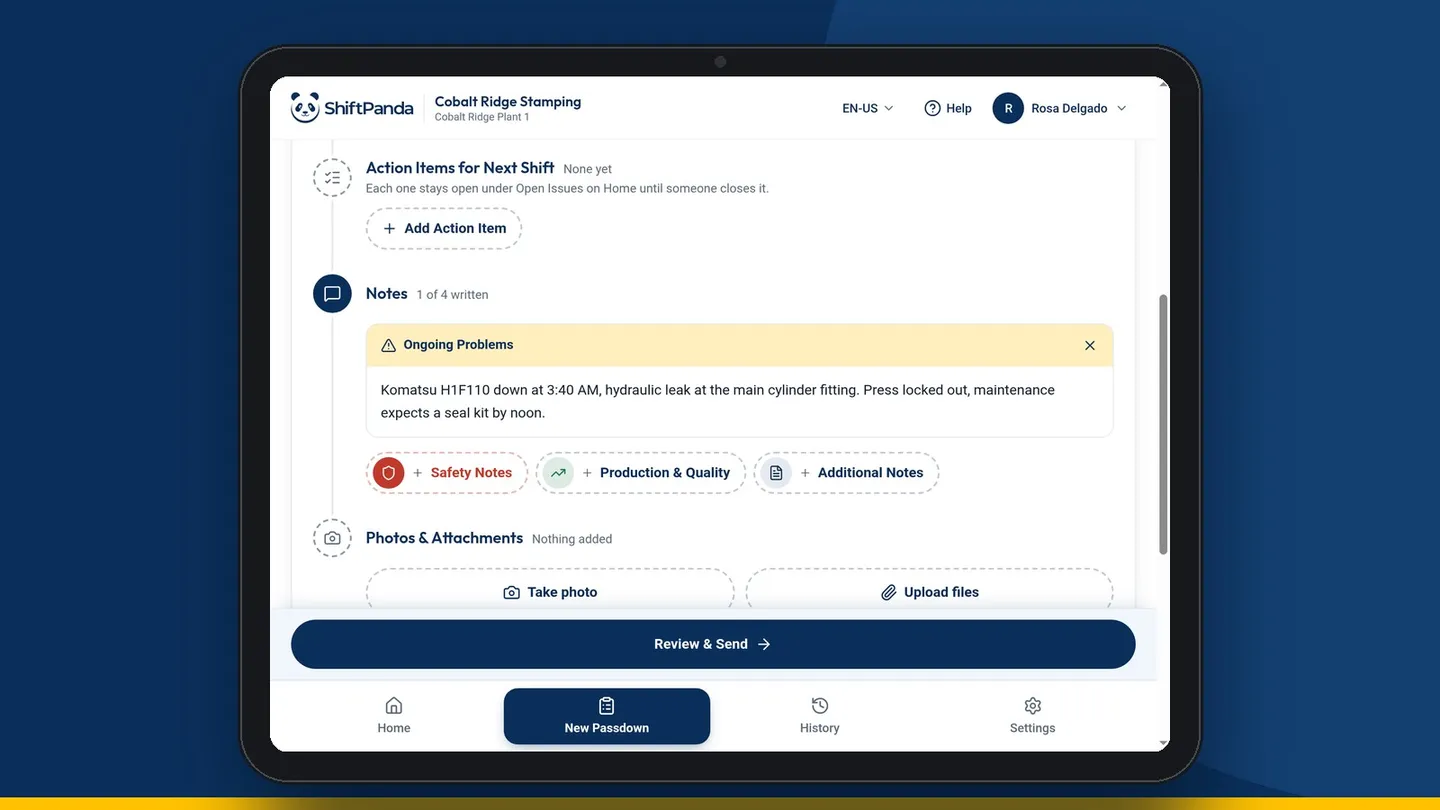
ShiftPanda is a passdown tool built for the floor. Every area and machine is right there, so you're not trying to remember what to cover. You set each machine to Running or Idle, add notes, log open issues, and submit. Every passdown shows who has read it and who acknowledged it, by name, so you know it landed.
It runs in a browser on a tablet, so there's nothing to install. The buttons are big and easy to tap, including with touchscreen gloves. Lose Wi-Fi mid-passdown and what you've typed is still there when you're back.
It doesn't replace your maintenance system or anything else your plant runs. It just replaces the clipboard, the whiteboard and the group text for one job: getting the next shift up to speed fast.
Try it on your next shift
You don't need a project plan to fix your passdown. Set ShiftPanda up for your area, invite your crew, and run your next shift change on it.
It's free for 30 days. If it makes your first ten minutes easier, bring the results to your plant manager.
Be ready for the next shift tonight.
ShiftPanda turns the end of a shift into a two-minute handover your next crew actually reads.
30 days free · $9 per user per month after